📜 I don't remember learning that a story was supposed to stay the same. My mother translated foreign films at the kitchen table in Brussels, and I would sit nearby watching her make impossible decisions. There was never a perfect translation. A sentence could be technically correct and still completely wrong. A joke could disappear. A political idea could arrive carrying a completely different history. Sometimes a single word had to be negotiated for ten minutes. That was probably my first education, not in language, but in power.
I became interested in what happens when meaning crosses a border. French into English. One cultural context into another. Theory into practice. An academic idea into a body. A political argument into an interface. I learned that translation isn't simply about finding the right word. The act of translation changes the thing being translated, and sometimes that change is where the interesting part begins. This became the logic behind my work as a designer, coder, and researcher: moving ideas between languages, systems, and forms, and seeing what they become along the way.
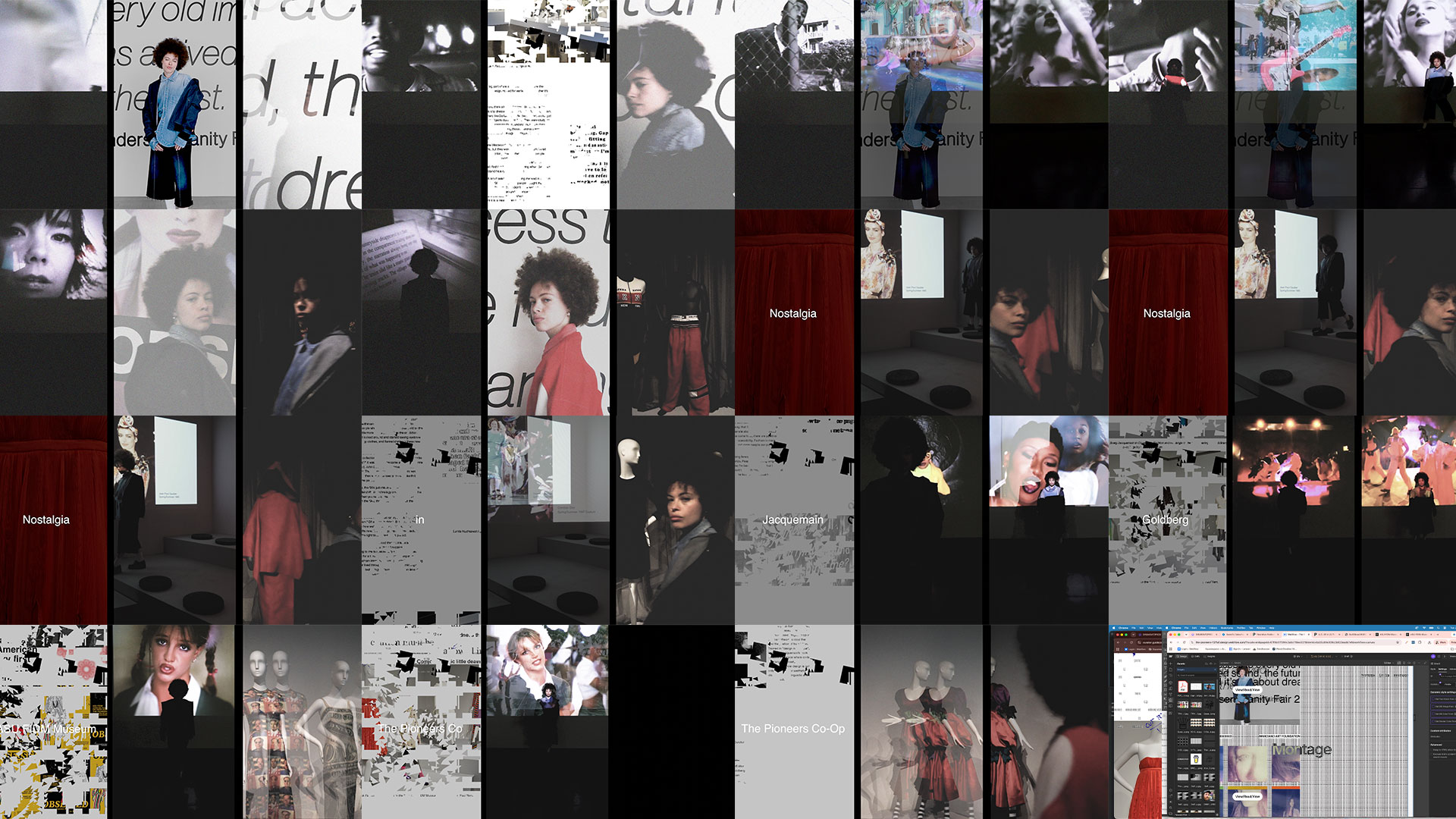
So I started making tools. I coded, built websites, designed interfaces, and worked across digital and cultural projects. I became interested in the fact that an interface is also a language, and that code is never simply technical. Both contain assumptions about how something should be understood, who should be able to access it, and what kinds of behavior are possible. I liked the fact that code could be precise and ambiguous at the same time. You could write one sentence and produce a thousand different outcomes. The same is true of language.
My work lives somewhere between design, code, critical theory, research, and translation. I am interested in systems that make themselves visible, in the architecture underneath the surface. I want to know who designed the framework, what assumptions are built into the interface, who gets access, who remains illegible, and what happens when the rules are changed. Much of my research begins with the movement of ideas between linguistic and political contexts, particularly when concepts emerging from decolonial, queer, and anti-racist struggles encounter different semantic and cultural histories.
I am also interested in what happens when those systems are opened up. Much of my process moves through open-source platforms, where a project can remain unfinished, available to be examined, altered, extended, or misunderstood. A tool can become an archive. An interface can become a conversation. A piece of code can become a proposition. The distinction between designer and user becomes less stable.
The same is true of this film. I noticed the pattern early: the repetitions, the mirrored conversations, the strange moments when someone says something they shouldn't know yet, the scenes that seem to remember other scenes. Nobody else seems particularly concerned. I am. I've started making small adjustments. A word here, a pause there, a phrase that means something slightly different after it has crossed into another language. A scene that happened yesterday happens again, but differently. I haven't decided whether this makes me the translator, the designer, or the problem. Maybe those are the same job.
I suspect the film knows I'm changing it. I suspect it has been translating me back. There is a version of this story in which meaning survives the journey intact. There is another in which everything changes the moment it crosses a border. And there is a third in which the distinction was never real. I'm still debugging that one.

.svg)