Slow Grief I

(Character)
Remy Rusha Fontaine
(Desire)
Dramatic Need: To inhabit the gallery he founded as an artist, allowing his private artistic life to enter the public institution he has built around the lives of others. | InterTo reconcile authority, vulnerability, grief, and desire, and to discover what happens when the roles of artist, dealer, host, and subject begin to overlap.al Need:
(Establish the World)

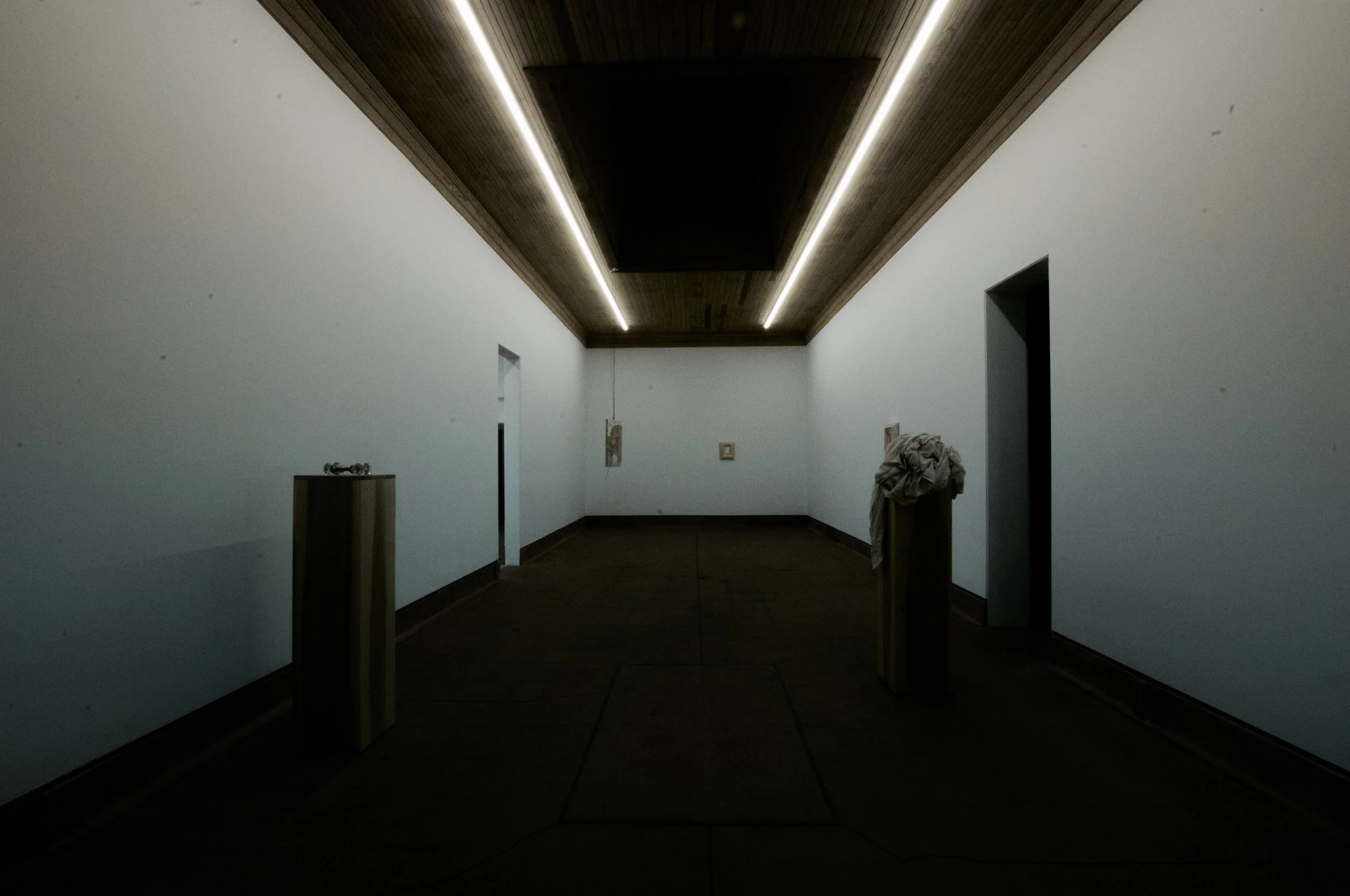
In South Los Angeles, a century-old firehouse has become a gallery, studio, gathering place, and occasional theater of human behavior. Remy Rusha Fontaine, its founder, has spent years inviting other artists into the building. Now he enters it himself, presenting his own paintings, drawings, and sculptures in "Slow Grief I: Foundations", curated by The Pioneers. Sol Axiom follows the exhibition as an unfolding inquiry into the relationships between art, sex, money, authority, grief, and the peculiar rituals through which people give one another meaning. The gallery becomes both setting and subject. Its inhabitants move between friendship, professional obligation, artistic production, and the more private arrangements of desire. Somewhere in the process, the person documenting the exhibition finds himself implicated in its story.

(Character Outline)
Remy Rusha Fontaine is an artist and the founder of Rusha & Co., a Los Angeles gallery established in 2020, initially as Seasons LA. Located in a restored 1914 firehouse in South Los Angeles, the gallery presents painting, sculpture, drawing, installation, and film, bringing artists and audiences into a shared architectural and social environment. In "Slow Grief I: Foundations", October 11, 2025, through February 11, 2026, Rusha becomes the subject of an exhibition within the institution he founded. His paintings, drawings, and sculptures move through fragments of the body, humor, sexuality, memory, and loss. The exhibition develops through an ongoing exchange with The Pioneers, whose documentation, curatorial involvement, and friendship become part of the narrative. Within "The Pioneers: The Film", Remy occupies several roles at once: artist, dealer, host, friend, and character. Each role carries its own expectations, and the relationships between them become increasingly difficult to separate.
(The Risk of Perception)
"Slow Grief I: Foundations" moves through desire, grief, labor, and power slowly and quietly, with dry humor about the strange choreography of flesh, pictures, and art-world conventions. Last year, while developing the exhibition with Remy Rusha Fontaine at a rapid pace, I had the sense we were touching on something unusually complex, the kind of idea that only reveals itself fully with time and good ol' retroactive introspection, flashbacks, flashforwards, and being in the present with him. At first it was more felt than thought. We love that for you. Flashback: Since around 2012, after finishing two degrees in art and one in architecture, or, as folk sometimes joke, after starting the process of shedding the skin 🐍 of academic vitriol, I've often reflected on the strange, sometimes sadomasochistic dynamics and rituals of higher education. Critique sessions could feel oddly theatrical, even cruel, as if certain professors derived a peculiarly erotic satisfaction from dismantling a student's work or ripping a new asshole 🍑 in public. Do they masturbate in the office afterwards? Where's the aftercare? Does that happen with ego strokes 🥰 in one-on-one studio visits reaffirming the aesthetic value of the student's thought and lifework?

I sometimes wonder how much of an artist's education is spent learning to make things, and how much is spent learning to survive other people's opinions of them.

(The Architecture of Power)
Flashforward: That experience later bled 🔪🩸❤️‍🔥 into my thinking about the broader power structures of the arts, especially in Los Angeles, where authoritative voices sometimes enact their influence through subtle but unmistakable sexual power plays 👉👌. At their worst, these dynamics have crossed into coercive, exploitative, and predatory territory IRL. It made me wonder whether those impulses, dominance, submission, authority, rebellion, might be better acknowledged openly and performed in consensual, imaginative forms 🪩💃🕺🎭 rather than disguised within institutional hierarchies 🏦 or the holy trinity of money, sex, and power 👁️.

Power moves through people, institutions, friendships, and desire. I keep returning to the question of what happens when everyone involved becomes conscious of the roles they're playing.

(The Devil Back in Hell)
What if a 'boss' creates a kinky 'scene' for his consenting adult lover playing the role of a 'sexy secretary', 'assistant', or 'service sub' to put the "devil back in hell"? Enter the infamous tenth story of the Third Day in Giovanni Boccaccio's fourteenth-century Italian Renaissance collection, "The Decameron". From there my thoughts drifted toward literature like "120 Days of Sodom" and "Story of the Eye", both grotesque but strangely accurate allegories for systems of industry, exploitation, and alienation. Libertinage, its obsession with excess, and its skepticism toward authority or being above the law begin to resemble the behavior of some sick corporate structures like the 'hostile takeover' or cultural institutions pursuing soft wiener power, touristic expansions at any cost in sleek sexy 'starchitectural' forms, massively 'blowing their load' globally on the public dime. Cultural Viagra? Faced with that bleakness, the question becomes whether there is any light at the end of the tunnel. Can the more primal sides of human behavior be sublimated into artistic form, transformed into something reflective, even beautiful, while still acknowledging the raw energies of desire, control, and fantasy that animate them?

Boccaccio understood something about human behavior that still seems to escape the boardroom. People have desires. They invent elaborate arrangements around them. Sometimes the arrangements become institutions.

(The Origin of the World)
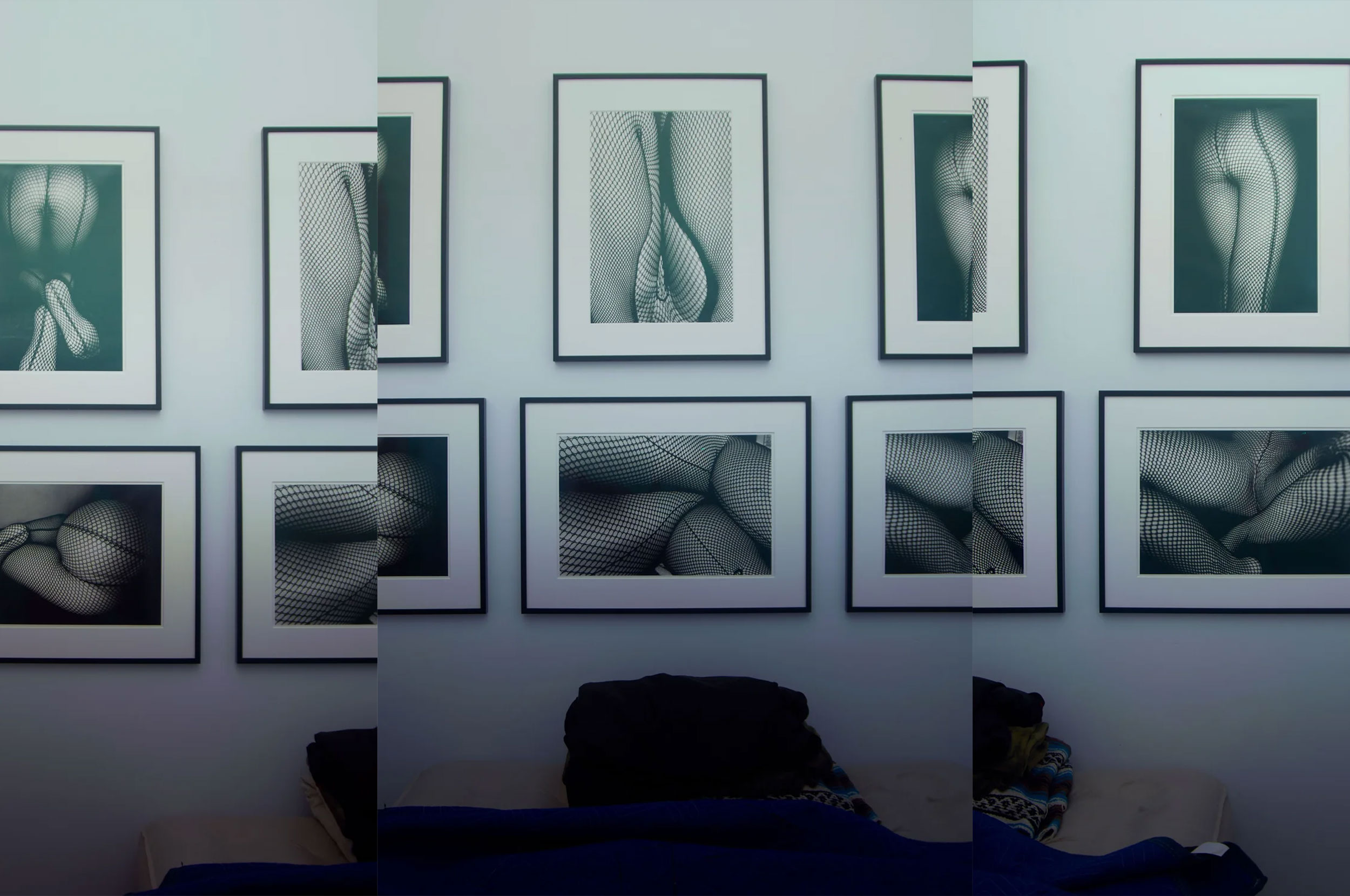
Present at Hand: Some of the paintings, drawings, and sculptures in "Slow Grief I" present fragments of women's bodies, torso, breast, pelvis, inner thigh, and pussy 🙀 suspended somewhere between intimacy and cliché 😱. Heads and legs chopped by the frame 🖼️, leaving body parts painting has returned to again and again: still seductive, up close and personal, lustful, banal, and boyishly mischievous. The blunt vocabulary of desire, sometimes reduced to cherry tits 🍒 and "sugar dick daddy Mister Long" pics. Enter Black Sheep's "La Menage" 🐏, Robert Mapplethorpe's glorious cocks, Daidō Moriyama's "Tights" series, and, stating the obvious, Gustave Courbet's "The Origin of the World", commissioned by the Turkish-Egyptian diplomat Khalil-Bey, hung 🍆 in his private salon. What happened behind those closed doors? 💦

A picture can travel a very long way from the circumstances of its making. Courbet's painting eventually entered the museum. I still find myself thinking about the room where it first hung, and the people who came to look.

(The Gaze)
I'm hyperaware of the long and often uncomfortable conversation around the heterosexual male gaze, taboos, and American Puritan posturing in art, media, culture war, and life. Those conversations matter. Desire and sex themselves are complicated beasts. They involve trust, play, and sometimes even finding humor in this inexplicable primal behavior. Isn't it more steamy, joyful, and fun 🤩 if it's forbidden ❌, countering the cold, calculated, and desert 🌵 dry institutional apparatus alongside the pragmatism of making babies 👶🏻 to boost the nuclear family and economy as a result? Boring 🙄. The fragments in these works acknowledge that tension. They flirt with objectification and cliché, drawing from a long lineage of male artists depicting women's bodies. They also ask what kinds of relationships make such images possible in the first place. Lust is rarely just visual; it's negotiated and often mutual. Many women recognize the strange duality of being looked at as an object of lust while also shaping how that gaze plays out in their sexual lives as something they desire. A submissive partner should have the first power of choosing to engage according to their soft and hard limits. Within a relationship built on communication, transparency, and trust, there can be a playful or chosen interplay of domination, submission, desire, objectification, romance, and care between partners. After a cute 🥰 date. Her: Use me Daddy. Make me your princess cum slut. Him: MINE. All holes. Get on your knees. NOW. Press record. Her: Felt cute 🥰 may delete. Enter "The Bottoming Book", "The Topping Book", and "The Ethical Slut" by Dossie Easton and Janet Hardy.

I wonder how often we mistake an image for the entirety of the relationship that produced it. The people involved have histories, fantasies, limits, and private understandings. A picture carries some of this into the world. The rest remains between them.

(Women)
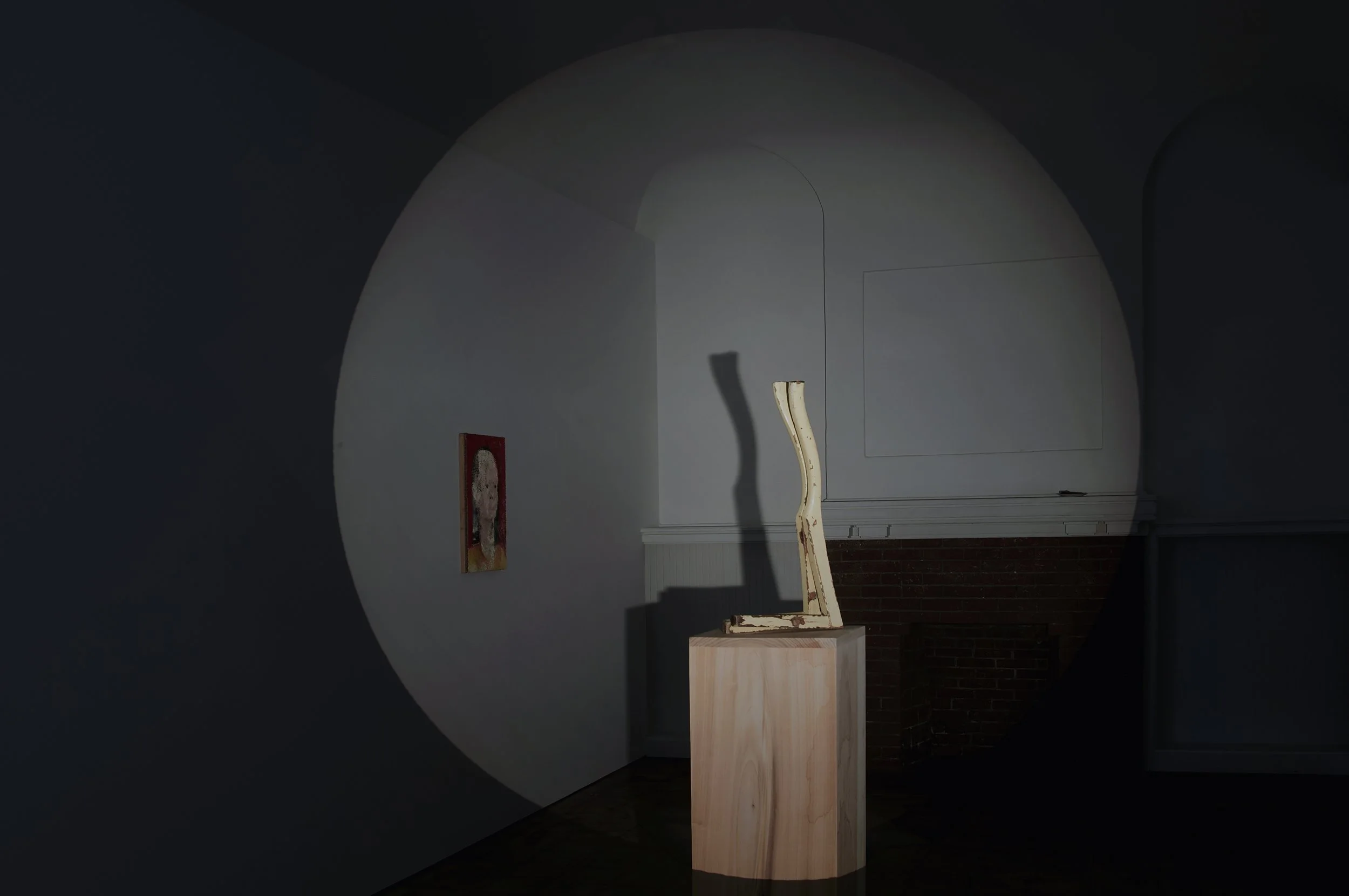
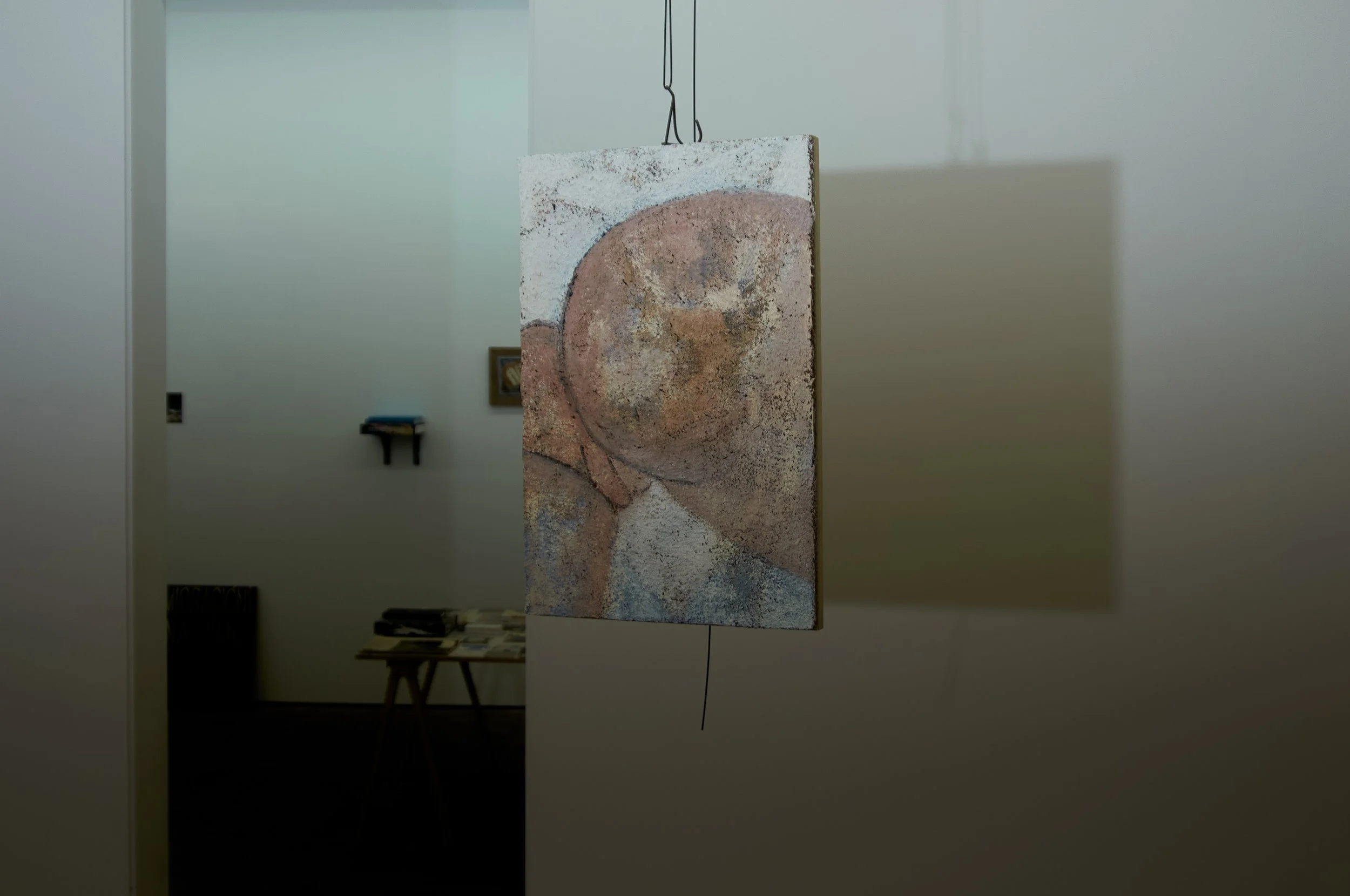
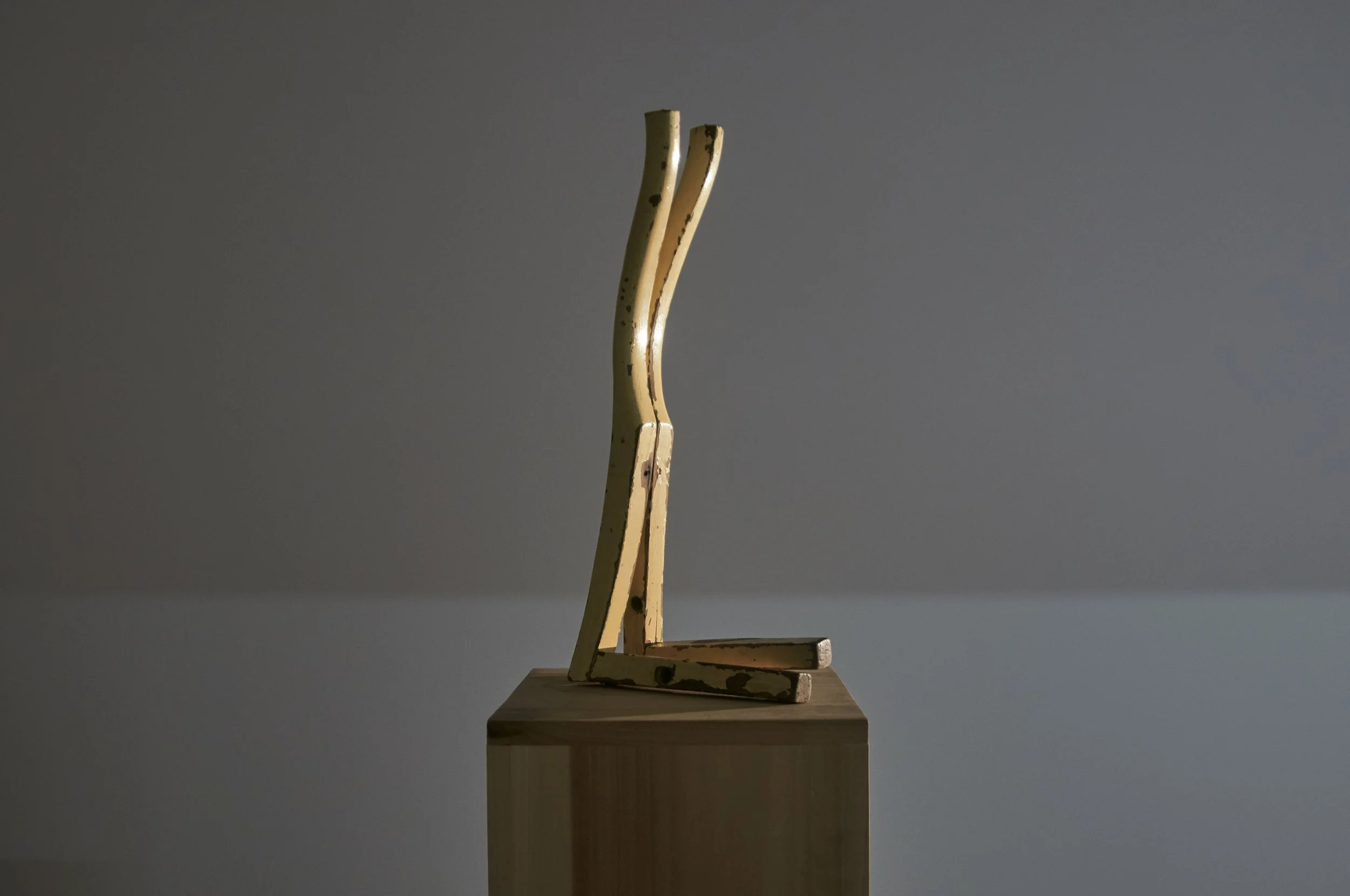
Art history is never far away. I found myself thinking about the controversies surrounding Pablo Picasso's masterpiece "Les Demoiselles d'Avignon" and Willem de Kooning's subsequent "Woman" series, paintings that have been criticized as violent and misogynistic while opening complicated questions about gender, sexuality, figuration, abstraction, psychology, composition, and the expressive performance of inner life. The approach here is less confrontational and slightly wry. At the center of the gallery, "Inside Women (Guy & Doug)" hangs from the ceiling, suspended like a body under tension, echoing the visual language of Shibari, a symbolic gesture of giving in to control and vulnerability. Enter Nobuyoshi Araki 📿⛓️. Nearby, "The Back" transforms pieces of a chair into a sculptural form that seems like she's on her knees, illuminated by a stage light, hovering somewhere between figure, furniture, fetish, and stage prop. Enter Allen Jones's "Chair, Table, and Hatstand" series.

Painting has returned to the body for centuries, taking it apart and putting it back together through desire, memory, and imagination. I suspect the body will continue to trouble us long after we've finished explaining it.

(A Dinner for One)
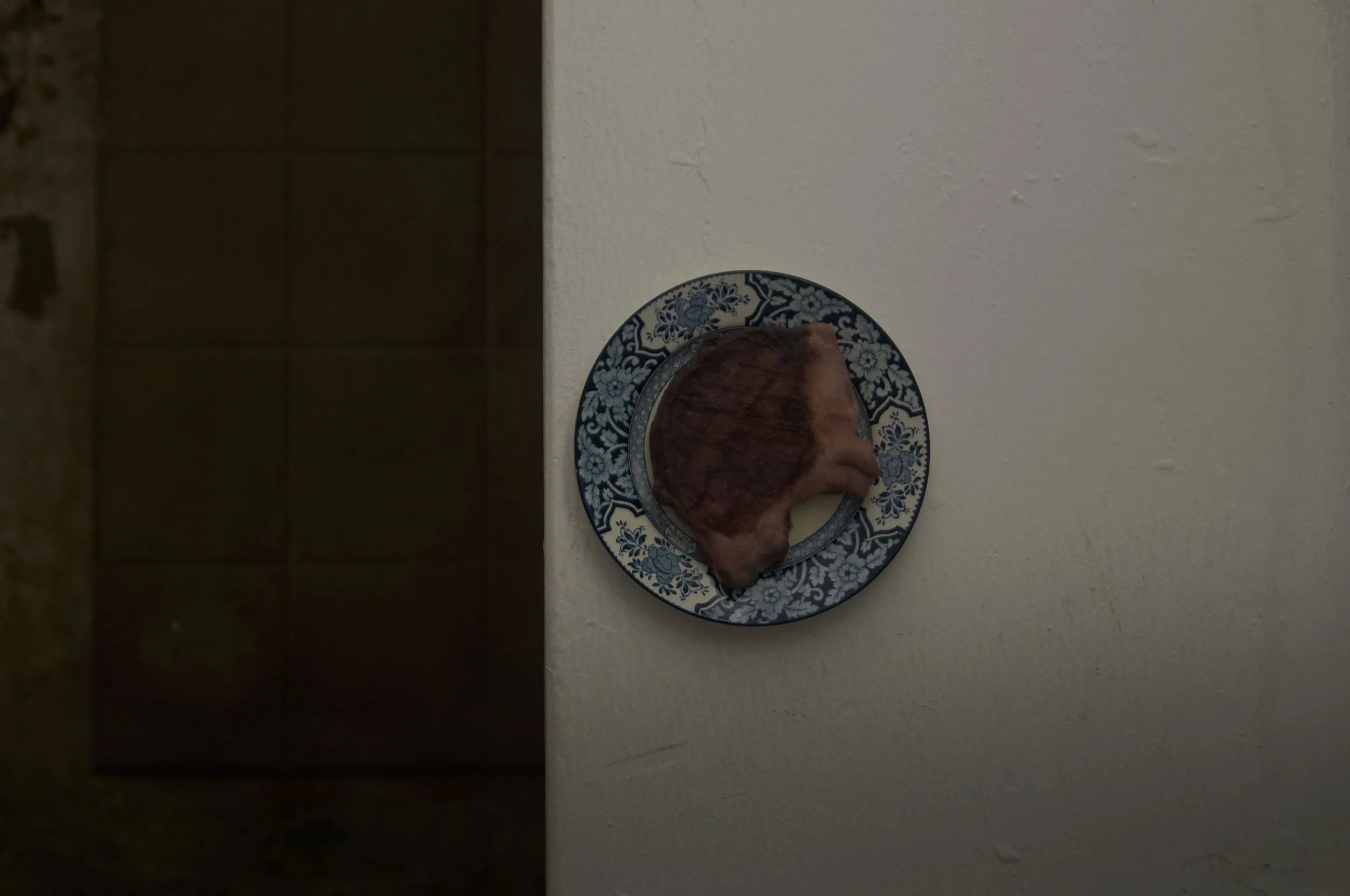
Other works extend this play between humor, ritual, and reflection. "Machimoodus" is a wax steak on a decorative plate functioning as a tea-scented candle, turning flesh into a slowly melting ritual object. Enter Judy Chicago's "The Dinner Party". A steak sits on a plate. It resembles food, carries the suggestion of flesh, and gradually consumes itself through the simple act of burning. There is something appealingly absurd about the whole arrangement. The domestic ritual of dinner becomes a small performance of disappearance. One can imagine the conversation around the table continuing long after the candle has burned down.

Everything eventually changes form. A candle burns, a meal ends, a body ages, a relationship changes. Perhaps this is why we keep making objects. We want something to remain long enough for another person to encounter it.

(For Your Next Project)
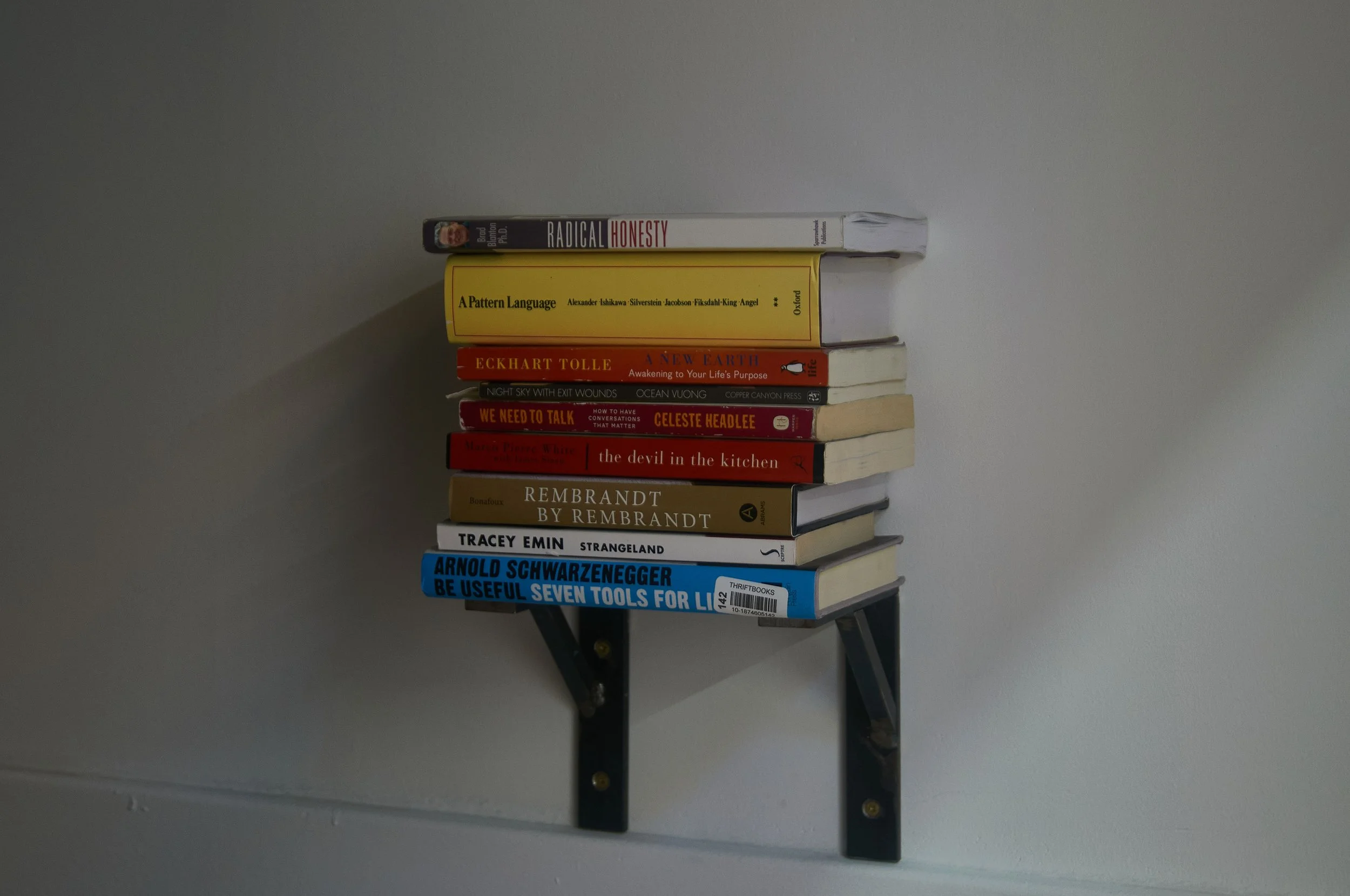
"For Your Next Project" presents a stack of self-help books topped with a self-portrait drawing and a volume of Rembrandt's self-portraits, nodding to the endless loop of artistic ambition and self-reflection. Enter Dame Tracey Emin on the shelf. The artist looks at himself, consults the wisdom of others, and returns to the same question. What comes next? Rembrandt made self-portraits across decades, allowing the passage of time to become visible through the changing face of the person making them. The self-help books promise another kind of transformation. Somewhere between the two sits the artist, presumably still wondering what to do with his life.

I have spent years accumulating images, paintings, books, and unfinished ideas. Every attempt to organize them seems to produce another project. There is probably a self-help book about this. I may already own it.

(Where You End I Begin)
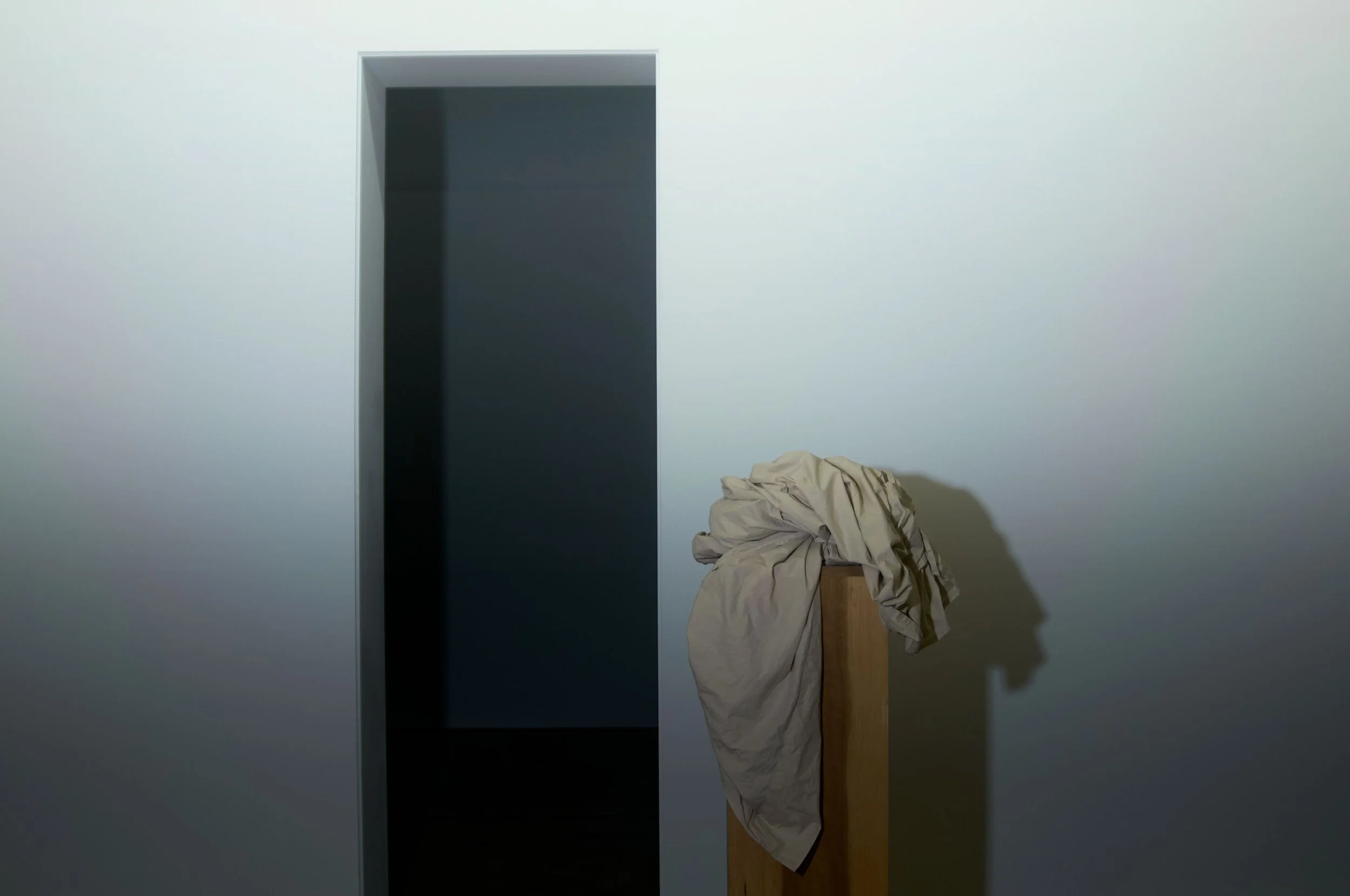
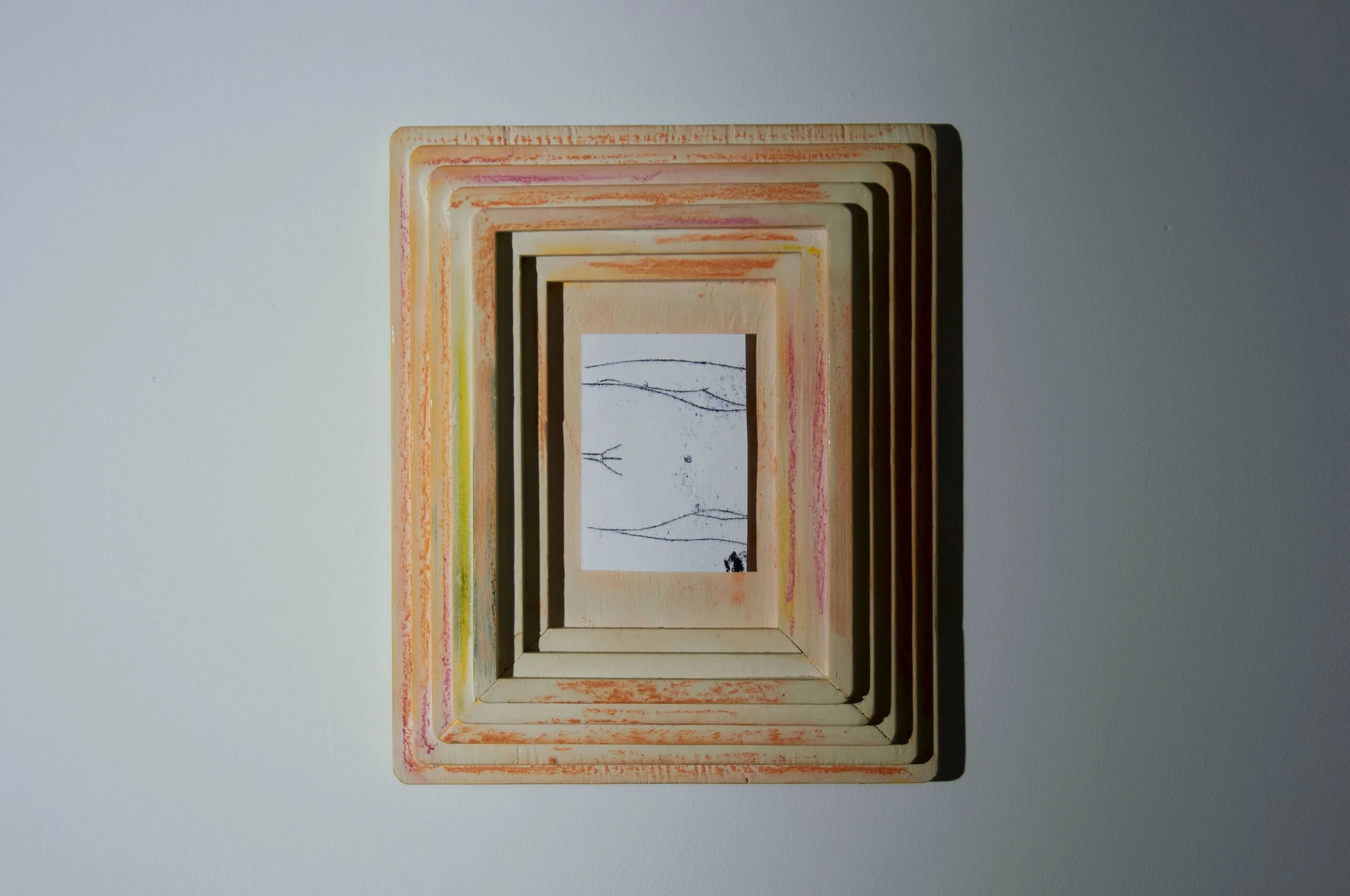
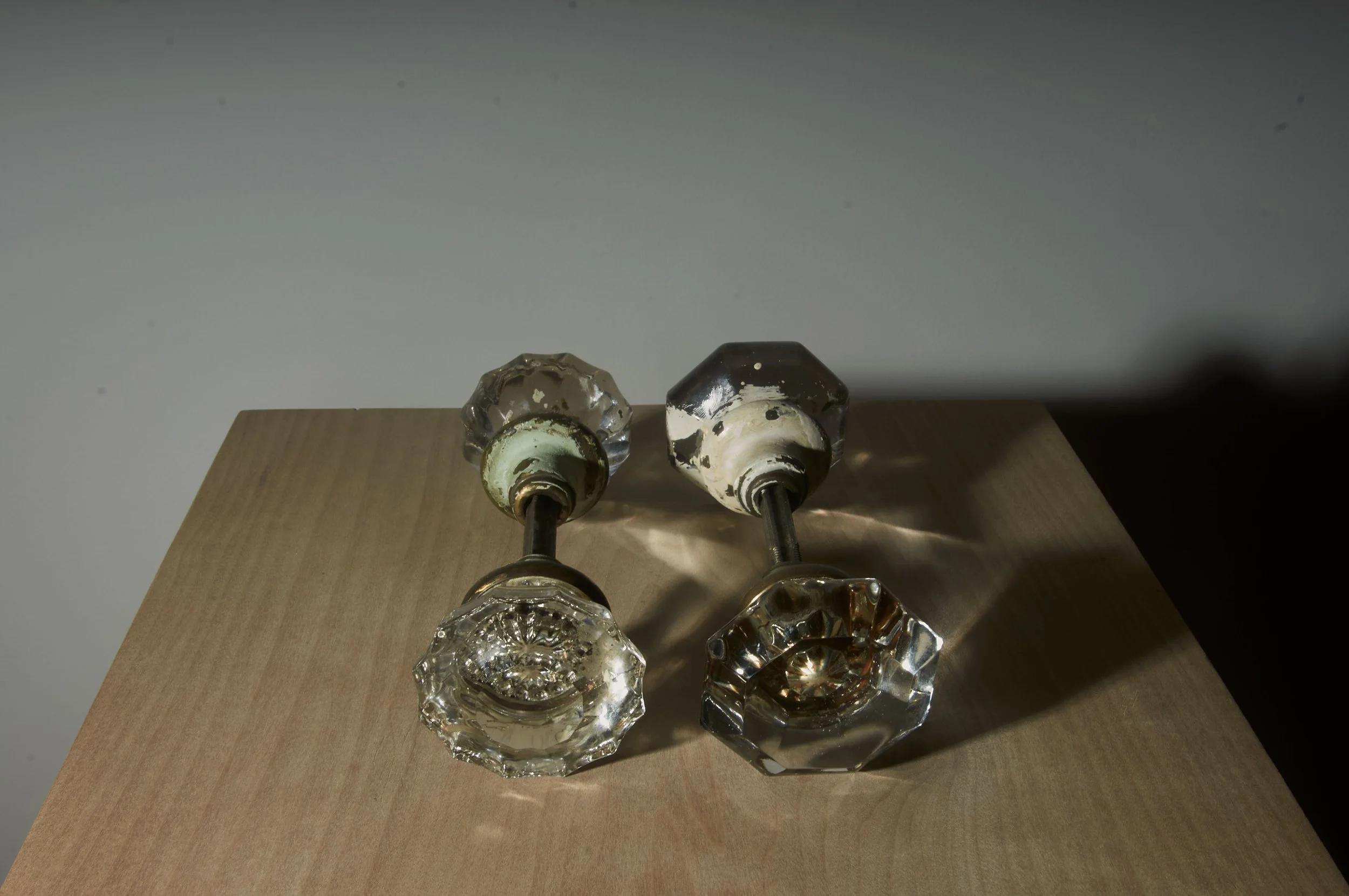
A site-specific wall drawing titled "Slow Grief" is interrupted by a small framed drawing installed directly over it, while "Endlessly" offers a painted portrait of a woman and "Where You End I Begin" places glass door handles on a pedestal, transforming them into quiet symbols of touch and threshold. Enter Marina Abramović's performance of "Imponderabilia", with Ulay, and Vito Acconci's "Seedbed". I keep returning to those handles. A door handle anticipates a hand. Its form is determined by the body approaching it, the possibility of entering or leaving, the moment of contact between a person and a place. Removed from the door, the handles retain the memory of that function. Two small objects become an arrangement of intimacy, separation, and passage.

A threshold is where two worlds meet. Someone enters, someone leaves, something passes between them. I wonder how much of our lives is spent moving through these small openings, hoping to find another person on the other side.

(Documentary Art)
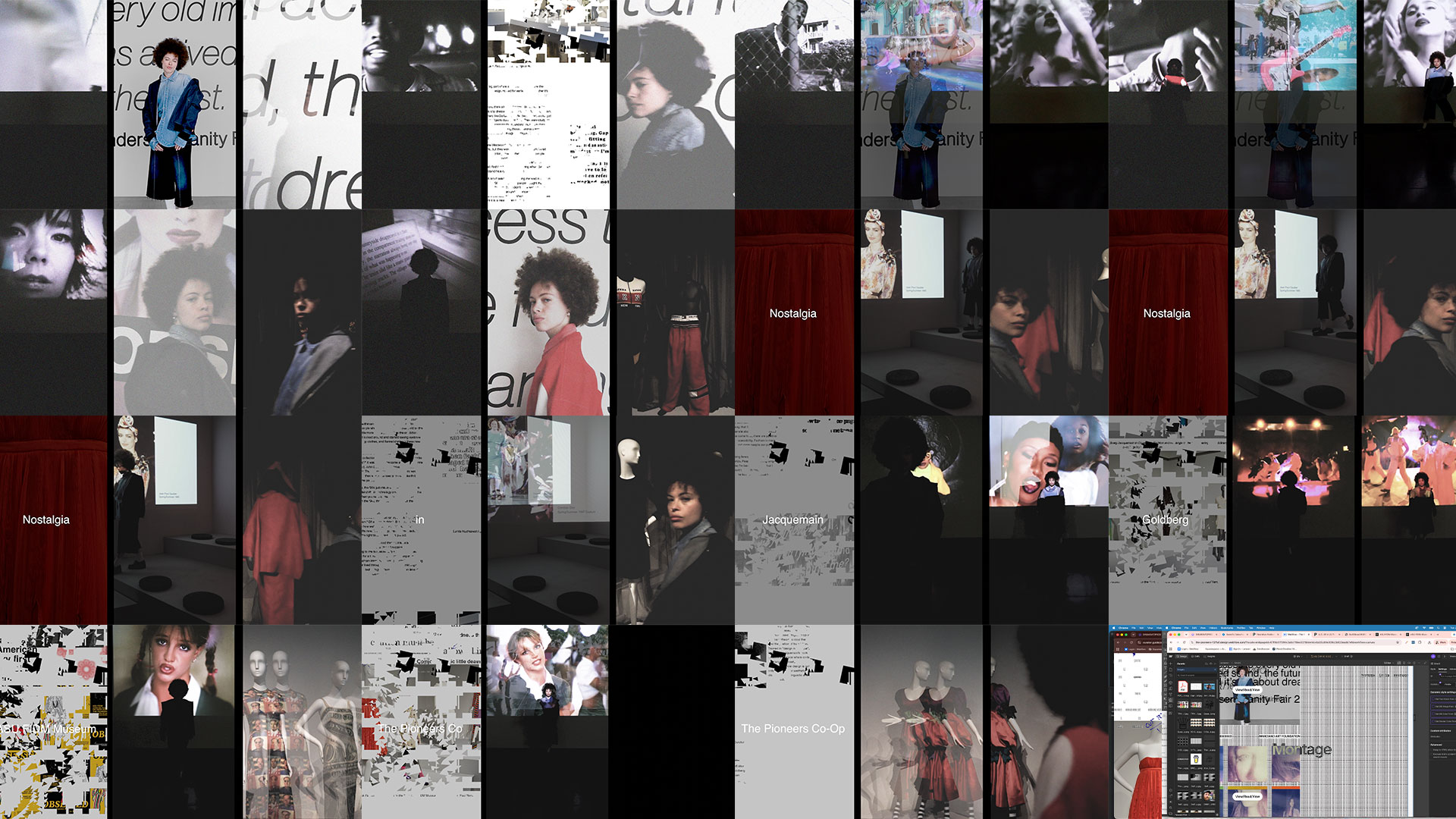
The Renaissance concept of disegno described drawing as both the act of making a line and the intellectual act of conceiving the idea behind it, thinking through the hand while drawing. In a similar spirit, the exhibition draws from The Pioneers Co-op's studio moniker 'documentary art,' questioning the convention that lensing the documentation must be neutral, perfectly color-corrected, stripped of the photographer's viewpoint or hand, eye, and mind coordination. The Pioneers Co-op reintroduces a perspective and throughline in a kind of informal residency: a studio situated within the gallery, living with the art as it develops. The documentation becomes part of the practice itself, observing the art over time, through shifting light, changing moods, and an ongoing exchange with the gallery founder as a friend and colleague, both representing the co-op and being represented by it. I began photographing the exhibition, talking with Remy, moving through the rooms, and watching the paintings change as the light moved across them. Eventually the photographs began accumulating into another body of images. Our conversations entered the record. My own presence became part of the conditions through which the exhibition was being seen.

The more time I spend documenting other people's lives, the more difficult it becomes to determine where their stories end and mine begins. The camera has a way of making everyone a character, including the person holding it. Enter "Black Mirror".

(We Breathe the Same Air)
Across the exhibition, pictures and objects behave like clues. Bodies appear partially. Vision remains incomplete. Humor interrupts seriousness. Power shifts subtly between artist, subject, and viewer. Grief lingers in the background, a slow awareness of time passing through relationships, institutions, submission, domination, a gallery in service of other people's art, private offices, salons, studios, and the act of making itself. The exhibition holds these tensions for a moment. The next chapter, "Slow Grief II: We Breathe the Same Air", pushes this atmosphere outward, from the private occultations and closed doors of the gallery interior and the founding artist's studio into a wider constellation of artists and colleagues across Los Angeles, where inner states begin to mix with the larger cultural air we all breathe. I think about the months spent in the gallery, the conversations, the images, the people who passed through, and the peculiar intimacy of becoming involved in someone else's artistic life. The exhibition has ended. Its relationships continue to move through other people and other forms. Some of the images will return in the film. Others may remain in the archive for years before finding their way into something else.

I keep thinking about how much of a life is carried by other people. A friendship, a painting, a conversation, a photograph. Each holds something of the person who made it possible. We pass these things between us, and for a while, they become part of a world we share.