(Agile Cinema®)
Acting is living truthfully under imaginary circumstances – Sanford Meisner

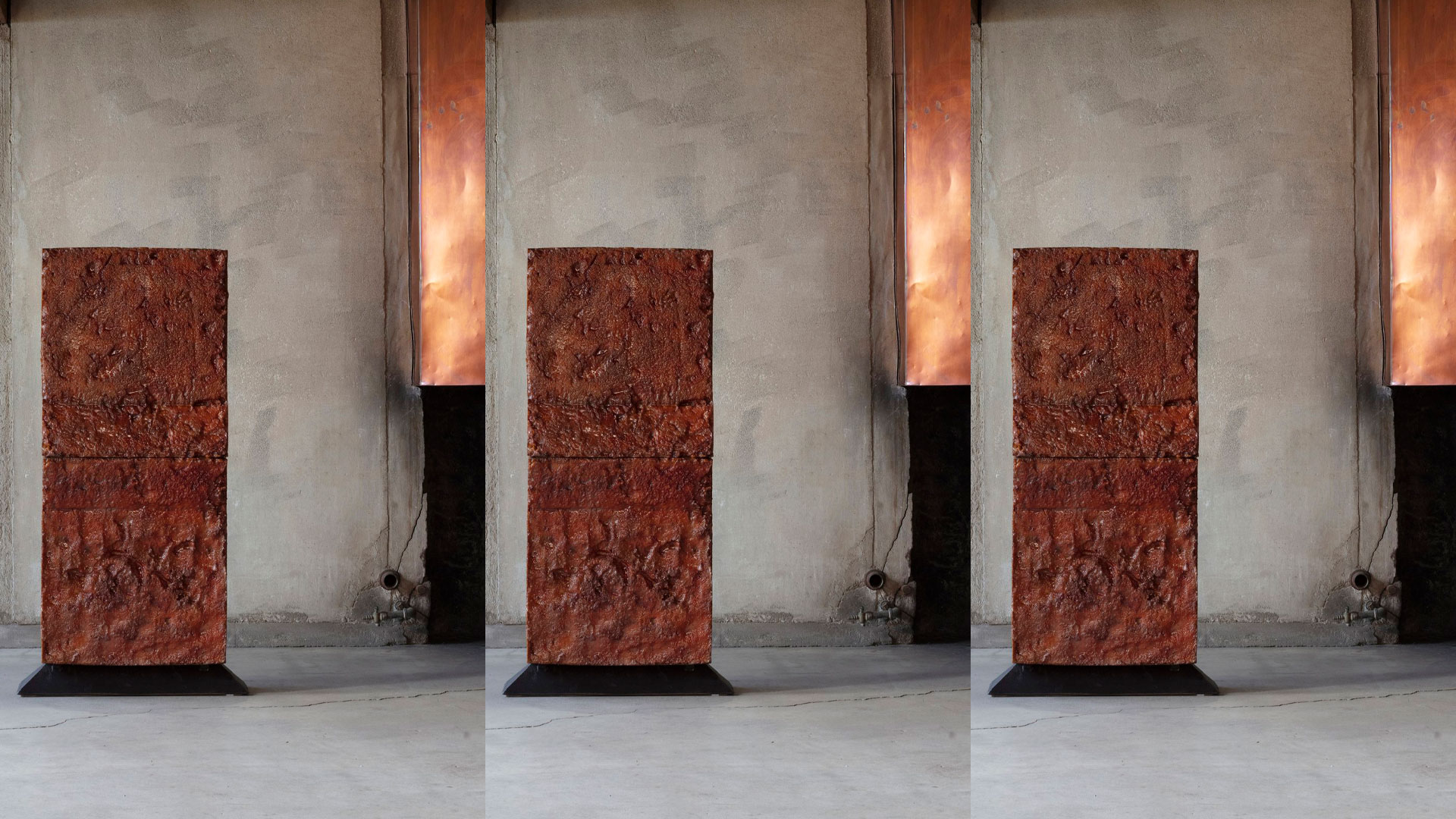
Tony Cragg's solo exhibition at Marian Goodman Gallery in Los Angeles presented an opportunity to investigate the difference between observing an object and knowing it. I approached the filming through a deliberately bureaucratic procedure: three locations, prescribed movements, and minimal direction. Tony circumambulates two sculptures in succession, then walks back and forth before a third. The instructions establish a consistent relationship between the gallery's architecture, the position of the camera, and the movement of the artist. Yet the sculptures resist reduction to these coordinates. Their contours change continuously as the observer moves, while their physical structures remain unchanged. The film records a succession of partial appearances rather than an authoritative account of the objects.

The procedure draws on conceptual art's interest in systems, instructions, and the displacement of expressive intention. There is something faintly absurd about asking a sculptor to walk around his own sculptures according to a predetermined set of directions. The actions resemble an administrative exercise, as though an adequate description of an artwork might be obtained by systematically exhausting its possible viewpoints. But observation is never complete. Even the most rigorous sequence of movements excludes other positions, distances, lighting conditions, and durations. The apparent neutrality of the instructions conceals decisions about what can be seen and what remains unavailable. After filming, I wrote the screenplay retrospectively, describing actions that had already occurred. The script becomes another partial account, translating physical events into language without recovering their full perceptual complexity.

Painting introduces a different version of this problem. Its frontal orientation encourages the assumption that the composition can be apprehended as a whole, yet the painted surface changes with proximity, illumination, and movement. Pigment accumulates in relief, edges establish physical boundaries, and the support occupies space beyond the image it presents. A reproduction may preserve compositional relationships while eliminating much of this material information. Cragg's sculptures make the dependence of perception on position immediately apparent; painting often conceals the same dependence beneath the convention of a fixed viewpoint. The film's repeated movements therefore establish no final understanding of the sculptures. Instead, they expose a limitation shared by observation, description, and documentation: the object remains materially specific while every account of it is necessarily incomplete.